sandalwood Movies.
Discover high-quality sandalwood cinema across all streaming platforms.

Babruvahana
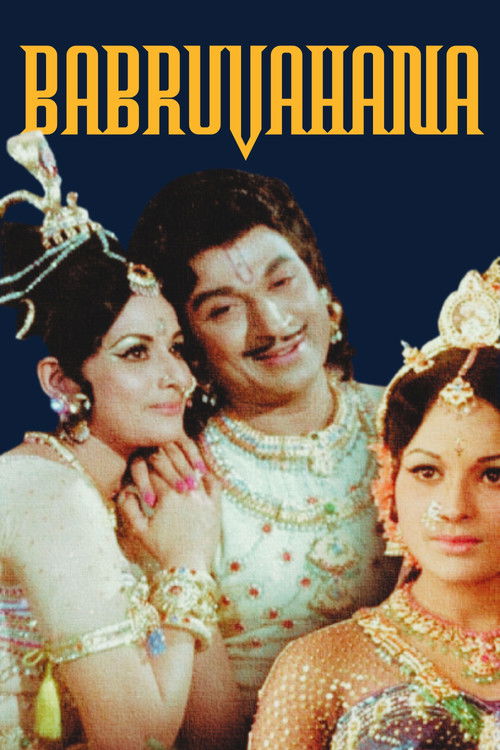
Babhruvahana, like Arjuna at the beginning of the Kurukshetra war, faces a moral dilemma. Can he risk harming his parents? While Chitarangada alerts Arjuna to shoot an arrow at their son and take advantage of Babhruvahana’s momentary lapse due to a sense of devotion towards them (as Arjuna did with Karna), Uluci, the Naga princess and yet another abandoned wife of Arjuna’s, reminds Babhruvahana of the teaching of the Kurukshetra battle that in the battlefield there is no space for feelings even towards parents. What Babhruvahana must do is to establish his mother’s good name and thereby his own character. This film captures this conflict spectacularly. The eerie parallels with the moral dilemmas of the great Mahabharata battle aside, here all the familial relationships (in particular, strong mothers and dutiful sons) become exaggerated and demand our attention.

Ghatashraddha
A young brahmin boy studying in a village away from home and a young widow isolated by her condition form a bond.

Kanneshwara Rama
Set in 1920s India, the story follows Kanneshwara Rama, a defiant peasant who becomes a legendary outlaw after confronting local injustice. After a prison stint where he encounters Gandhi’s followers, he joins and eventually leads a group of bandits, becoming a Robin Hood-like figure who aids the poor and challenges feudal authority. His journey is complicated by his relationship with Malli, a former bandit’s mistress, and his growing ambition to establish his own principality.

Tabbaliyu Neenade Magane
The movie explores the cultural problems experienced by an American woman, newly married to an Indian, adjusting to Indian norms and customs. It depicts a modern man who studies agriculture in the United States, returns to India with an American wife with their different views. The theme is one alienation from the fellow human beings.

Aparadhi
Aparadhi is a 1976 Indian Kannada-language film, directed by Y. R. Swamy and produced by S. Heerabai. The film stars Srinath, Aarathi, Balakrishna and Narasimharaju. The film has musical score by Satyam. This film was the 500th Kannada film to be released.

Phalitamsha
A young man chases love. He encounters three women. Infatuation. Fame. Friendship. He mistakes them for romantic love. And is disillusioned. Eventually his level-headed wife and some tenuous circumstances help him comprehend the meaning. The movie was predominantly shot in Bijapur. The movie paired newcomer Jai Jagadish with four heroines.

Badavara Bandhu
Badavara Bandhu is a 1976 Indian Kannada language drama film directed by Vijay. It stars Rajkumar and Jayamala. The movie is also notable for the negative character played by K. S. Ashwath.The movie saw a theatrical run of 25 weeks and was declared a Blockbuster at the box office.


Naa Ninna Mareyalare
Due to her mother's disapproval, Usha has to leave her lover and get married to a man she does not love. However, fate brings the estranged lovers face to face again. The film is based on the short story Naanu Neenu Jodi by A. R. Anand.

Bangarada Gudi
Bangarada Gudi is a 1976 Indian Kannada film, directed by K. S. R. Das and produced by C. H. Prakash Rao. The film stars Vishnuvardhan, Manjula, Ambareesh and Padmapriya in the lead roles. The film has musical score by G. K. Venkatesh. The director remade the movie in Telugu in 1979 as Bangaru Gudi.

Bayaludaari
Bayaludaari is a 1976 Indian Kannada-language film directed and produced by the Dorai–Bhagavan duo. It is based on the novel of the same name by Bharathi Sutha. This was the first movie of the director duo without Dr. Rajkumar in the lead. The film starred Anant Nag, Kalpana, and K. S. Ashwath. It was a musical blockbuster with all the songs composed by Rajan–Nagendra considered evergreen hits. Bayalu Daari was the first commercial success for Anant Nag who had earlier done art films and established himself as a leading star in the Kannada cinema with a chocolate hero image. This film was one the last big hits of Kalpana. The helicopter scenes formed a major highlight of the movie.

Raja Nanna Raja
Geetha is in quest of finding a suitor. Just when she believes that she has found her perfect match, a stalker tries to convince her that he was her lover in their previous birth.

Bahaddur Gandu
Bahaddur Gandu is a 1976 Indian Kannada film, directed by A V Sheshgiri Rao and produced by Srikanth Nahatha and Srikanth Patel. The film Stars Dr Rajkumar, Jayanthi, Aarathi and Shantha in lead roles. The music of the film was composed by M Ranga Rao.


Trimurthy
The film stars Rajkumar, Jayamala, R. Sampath, Balakrishna and Vajramuni. Rajkumar plays 3 different roles in the film- A police inspector Vijay, a hippie vagabond Shekhar, Servant Sheshagiri and the main protagonist Sridhar. The movie was the debut movie of Tamil director C. V. Rajendran in Kannada. The film is divided into 3 stories – Thrimurthy, Undoo Hoda Kondoo Hoda and Aalaagaballava Arasaagaballa. The movie was Parvathamma's first production venture under Poornima Enterprises banner. It was also her maiden distribution venture.
Mayura
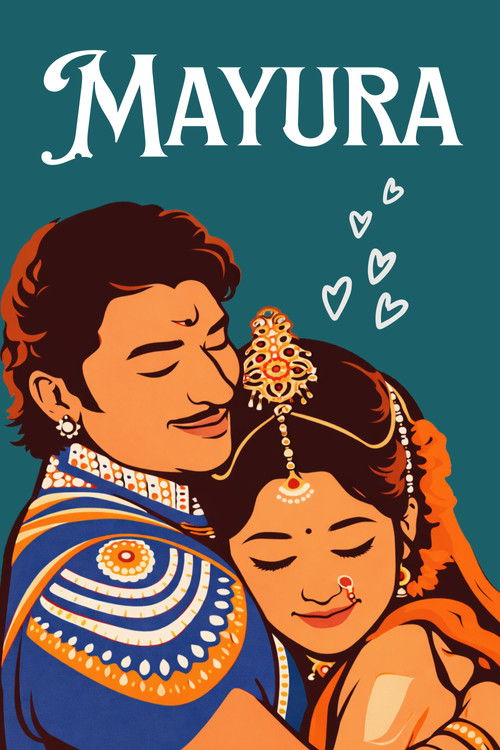
Mayura challenges an arrogant wrestler and defeats him. Though never formally trained he has only learned techniques of wrestling by observing others. As a Brahmin he is required to study Vedas yet he is deeply interested in martial arts. Ranga Jetti, the premier wrestler in Kanchi, takes him under his wing and trains him. One day while observing the training of Pallava princes Mayura gets into a fight with and thrashes Vishnugopa, the Pallava prince, earning his enmity. Mayura has to flee Kanchi as per the advice of Ranga Jetti to escape from pursuing Pallavas. He also then learns that he is in fact the son of Raja Chandravarma, the Kadamba king who was deceitfully killed by the Pallava king, Sivaskandhavarma. Upon learning of his illustrious lineage, Mayura dedicates himself to overthrow the Pallava yoke. Returning to Banavasi in the guise of a merchant Mayura builds an army and conquers both Banavasi and the Telugu speaking regions around Srishaila, thus building a vast kingdom.