Best on Hotstar.
Everything you can stream on Hotstar today, handpicked by our recommendation engine.

Chandni
Two identical women, city-bred Chandni and village teacher Devi, swap clothes on a train, leading to their husbands mistakenly taking home the wrong wife. As chaotic domestic lives unfold, their interwoven fates unravel through illness, mistaken affections, and a final public revelation of their switched identities.


Bahen
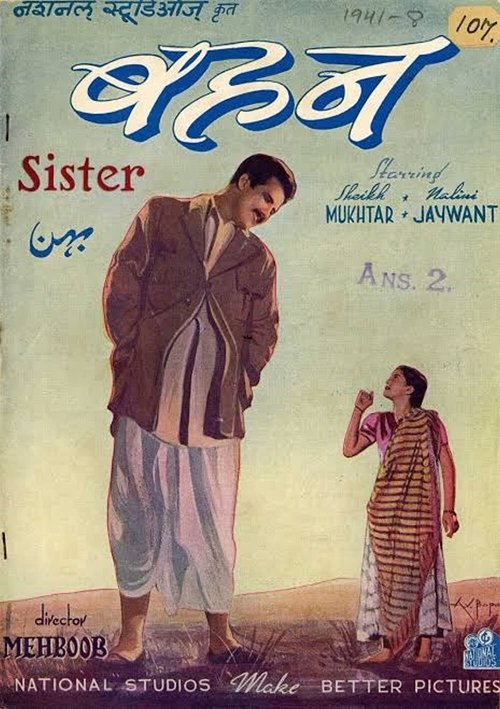
Having saved his little sister Bina (Baby Meena Kumari) from the floods, Amar (Sheikh Mukhtar) becomes increasingly possessive about her over the years. Amar falls in love twice but forgoes marriage so he can look after the growing Bina. Bina (Nalini Jaywant), now a grown up young girl falls in love with the social activist Rajendra (Harish). However, Amar can not bear to lose Bina and so he plans her marriage to the thief Moti Kanhaiyalal, with the idea that he'll get her divorced after some time and then Bina would stay with him always. After several incidents that end up uniting Rajendra and Bina, Amar gets some happiness when a daughter is born to Bina.


Durga
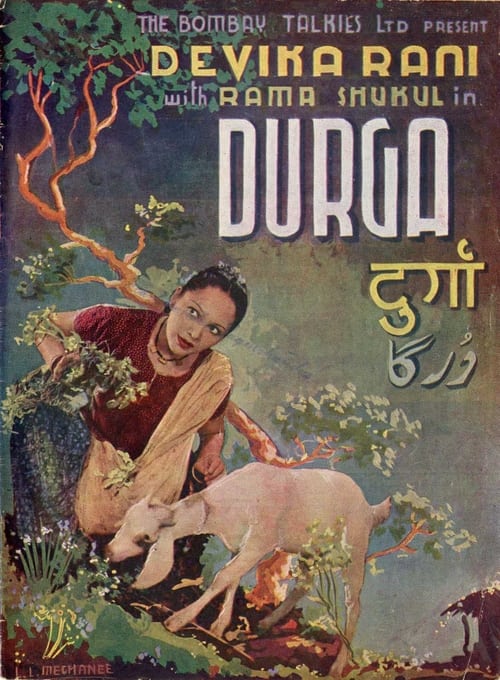
Rural melodrama about Durga, an adolescent child of nature, living with her aged mother Heera. Unable to get the medicine required to prevent her mother's death, one misfortune after another befalls the heroine in spite of the sympathies of the newly arrived village doctor, Jawahar.

State Express
Successful stunt movie featuring a vivacious prince (Jayant), his evil uncle, and a masked girl (Akhtar). Its major attractions, apart from Akhtar who also sings all the songs, is a performing gorilla. Together with e.g. Leatherface (1939), this is the best known of mythological specialist Bhatt’s early stunt work.

We Three
Mehboob presents the autonomous passion of Leela (Rose) for Moti (Motilal) who is promised to another woman, Bina (Maya). Leela is portrayed as irresponsible and impulsive as she acknowledges her desire for Moti and has a child by him. Bina then releases Moti from his promise. Moti suffers when he is told by Bina’s father (Sankantha) that she is dead, while Leela’s father (Pande) enjoins his daughter to commit suicide if Moti does not marry her. In spite of the film’s endorsement of ‘traditional’, lethally oppressive patriarchal mores, incarnated by the women’s fathers, Mehboob’s narrative at least dares to depict a woman who refuses to feel guilty about her desire.
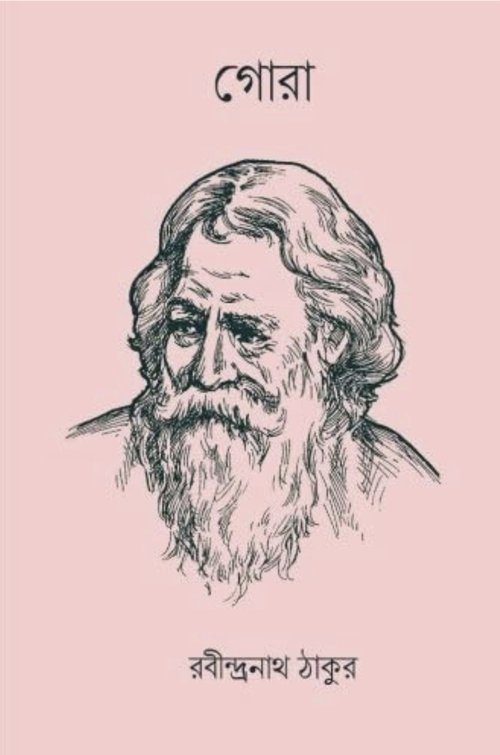
Gora
Gora and Mahim were two sons of Krishna Dayal Babu. From childhood, Bijay and Gora were friends. Through an accident, Bijay was introduced to Paresh Babu's family. Paresh was a Bramhin. So Gora did not like Bijay's visit to that house. Gora's mother was very anxious about Gora's Hindusim. Krishna Dayal was also very annoyed being an orthodox Hindu. As per his father's request, Gora went to Paresh Babu's house. Paresh babu's wife Bhadra Sundari was not happy seeing Gora there. But Gora had a real conflict with Haran Babu. The marriage of Haran Babu and Suchitra was almost fixed. The reason of the conflict was that, Haran Babu always thought of himself to be a social reformer and saviour of Brahma religion.
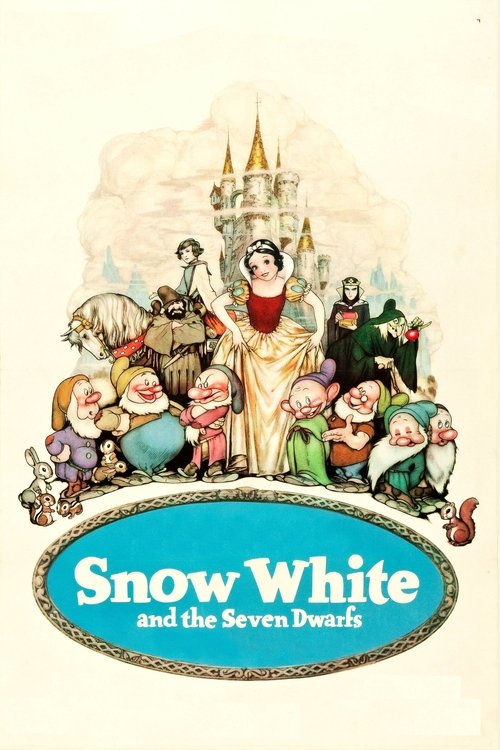
Snow White and the Seven Dwarfs
A beautiful girl, Snow White, takes refuge in the forest in the house of seven dwarfs to hide from her stepmother, the wicked Queen. The Queen is jealous because she wants to be known as "the fairest in the land," and Snow White's beauty surpasses her own.

Double Cross
This modernization drama tells of Prof. Mukherjee (David), the inventor of a diamond manufacturing process. His uncle, the stockbroker Romesh Chandra (Gyani) who invests in diamond mines, faces bankruptcy because Sardar Mulkraj (Nayampally) plots to ruin the mine owner Rangnath (Mohan) and take power in the feudal state of Panipur. The invention can alter the power struggle if either of the factions gets hold of it.
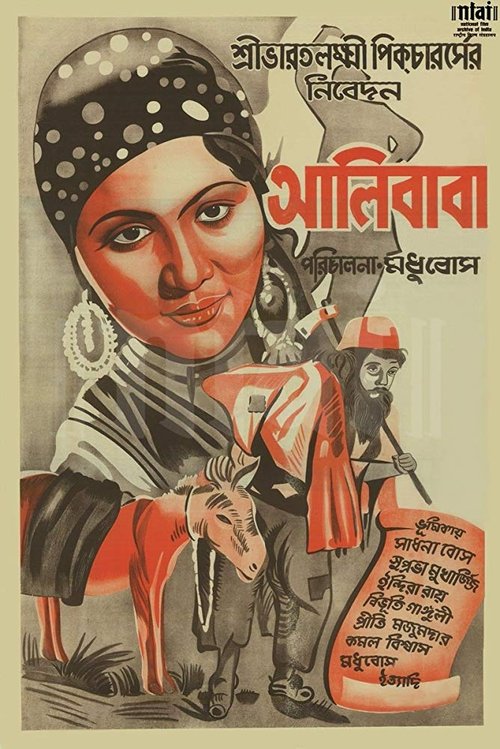
Alibaba
Based on the 'Arabian Nights', this film tells of the Baghdadi woodcutter Alibaba (M. Bose) and his magic 'Open Sesame' formula; of the hero's jealous brother Kasim and the slave girl Marjina (S. Bose). The film adapts the 1897 play, giving it a Hollywood-derived exotic flavour. An improvised 'modern' dance is inserted. The slow, mannered acting with the frontally framed tableau shots are enlivened by the dance scenes, especially the Marjina-Abdallah sequence.
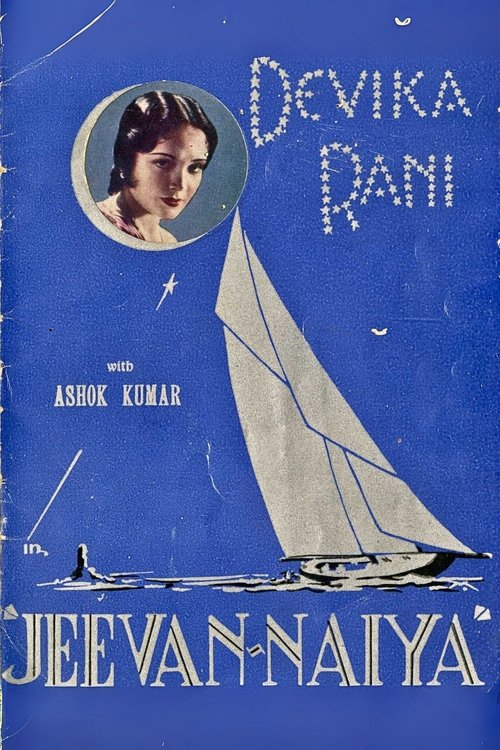
Jeevan Naiya
Lata, daughter of a dancing girl, is brought up by social worker Mathuradas and is engaged to marry the rich Ranjit when the villain Chand arrives to blackmail her with her undisclosed ancestry. Lata is forced to disclose the truth to Ranjit and the assembled wedding guests. Ranjit disowns her but they are reunited when Ranjit, blinded by an explosion, is nursed back to health by a devoted woman who turns out to be his wife.

Orphans of Society
A melodrama about the rich and callous Vilas (Pendharkar), who abandons girlfriend Shama (Wadkar) whe he discovers that she is pregnant. She raises her son Nandu (Mainkar) with the help of her younger brother and the film's hero, Sanjeev (Vinayak). When Vilas re-enters their lives, it is with a new name, Ishwar, and with the intention of seducing the rich Princess Indira (Samarth) who loves Sanjeev. Ishwar has a bad accident and an attack of amnesia that also leads to a confession of his past deeds.

Desh Dasi
A jaded socialite, Vinakumari, and her lover, Dr. Rasik, discover purpose at a Gandhian ashram. Vinakumari dedicates herself to the poor as the ashram battles challenges from urban temptation to famine and greedy landlords. Dr. Rasik eventually joins the cause, bringing much-needed medical aid to the struggling community.
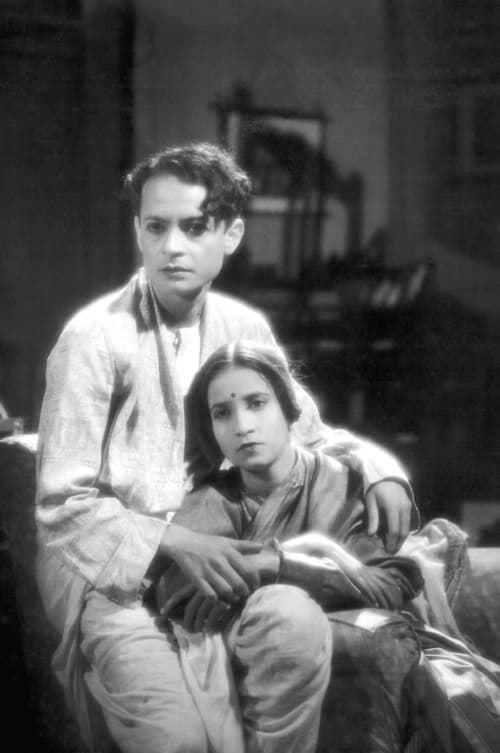
Devdas
Devdas, the son of a zamindar, and Parvati, his neighbour's daughter, are childhood sweethearts. However, class and caste differences prevent their marriage. Devdas is sent off to Calcutta, while Paro is married off to an aged rich widower. In Calcutta, as remorse drives him to alcohol, Devdas meets Chandramukhi, a prostitute. All Indian prints of this Bengali version were destroyed in a fire that ravaged New Theatre’s studios. Today, only one copy of the film survives which belongs to the Bangladesh Film Archives. Of that copy almost forty percent is destroyed.

Dharmatma
Sant Eknath, a 16th-century poet-saint who challenges caste discrimination by serving and dining with the untouchables. His actions provoke outrage from orthodox Brahmins, leading to his excommunication. Despite opposition, Eknath stands firm in his belief in equality and devotion, inspiring others to join his cause and defending his principles through his spiritual teachings.